
How strong is your grip?
Grip strength might seem like a simple measure of hand strength, but research suggests it can offer a useful snapshot of broader physical health and function.
This Father’s Day, we’re inviting everyone in our Inborn Vitality community—children and adults alike—to put their strength to the test as part of our Father’s Day Competition.
Before you take hold of the dynamometer and give it your best squeeze, let’s explore what grip strength is and why researchers pay so much attention to it.
What is grip strength?
Grip strength is the amount of force you can generate when squeezing an object with your hand. It is usually measured in kilograms using a handheld device called a dynamometer.
Although the test focuses on the hand and forearm, producing a strong grip requires communication and coordination between the brain, nervous system and muscles. It can therefore provide a simple, non-invasive measure of overall muscle function and neuromuscular performance.
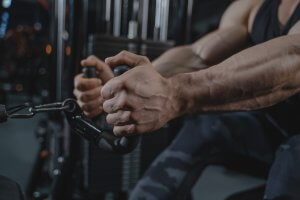
Grip strength
Why does grip strength matter?
Grip strength is often described as a useful marker of healthy ageing because lower grip strength has been associated with:
- Lower overall muscle strength and muscle mass
- Reduced physical function and independence
- A greater likelihood of frailty and falls in older adults
- Some cardiovascular and metabolic health concerns
- Cognitive decline in later life
- A higher risk of illness and all-cause mortality
Importantly, these are associations—not proof that a weaker grip directly causes poor health or that a stronger grip guarantees a longer life.
In the large international PURE study, every 5 kg reduction in grip strength was associated with a 16% higher risk of death from any cause during the study period. Grip strength was also associated with cardiovascular mortality, heart attack and stroke.
This does not mean that a single result can predict an individual’s future. Instead, it helps explain why grip strength may be considered one useful piece of a much broader health picture.
Grip strength and everyday life
Our hands are involved in an extraordinary number of everyday activities—from carrying shopping and opening jars to gardening, working with tools, lifting children and holding onto a railing.
Grip strength can also reflect our capacity to perform broader functional activities. Maintaining strength throughout the body helps us remain active, capable and independent as we age.
Like blood pressure, weight or resting heart rate, grip strength is generally most informative when considered alongside other health information and tracked consistently over time.
What is a “normal” grip strength?
There is no single number that everyone should achieve. Grip strength varies according to age, sex, hand dominance, body size, activity level, injury history and the testing method or device used.
The following figures are average results from a population-based Australian study. They show the average strength recorded for each hand—not a combined total.
| Age | Men: right hand | Men: left hand | Women: right hand | Women: left hand |
|---|---|---|---|---|
| 20-29 | 47 kg | 45 kg | 30 kg | 28 kg |
| 30-39 | 47 kg | 47 kg | 31 kg | 29 kg |
| 40-49 | 47 kg | 45 kg | 29 kg | 28 kg |
| 50-59 | 45 kg | 43 kg | 28 kg | 26 kg |
| 60-69 | 40 kg | 38 kg | 24 kg | 23 kg |
| 70+ | 33 kg | 32 kg | 20 kg | 19 kg |
These figures are group averages rather than pass-or-fail targets. Being above or below an average does not, by itself, indicate good or poor health.
Grip strength in children changes considerably as they grow, so children’s results should not be compared with these adult averages. For our Father’s Day Competition, the children’s test is simply a fun opportunity to participate and record their own result.
Testing position and technique also matter. For a meaningful comparison over time, the same device, hand position and instructions should be used each time.
What does the research say about chiropractic care and strength?
Strength is not produced by the muscles alone. The brain and nervous system must activate, coordinate and continually adapt the way those muscles work.
Research involving Dr Heidi Haavik and colleagues has explored whether chiropractic adjustments may influence this brain-to-muscle communication.
In one small experimental study, participants receiving a single session of spinal manipulation demonstrated changes in specific measures of nervous-system activity and lower-leg muscle performance compared with a control condition. The researchers reported a 16% increase in the force produced by the targeted muscle, alongside changes in the brain’s drive to that muscle and measures associated with fatigue.
The Australian Spinal Research Foundation helped support and communicate this research. A subsequent systematic review also found preliminary evidence that spinal manipulation may produce short-term improvements in isometric muscle strength in healthy people.
These studies are interesting because they suggest that an adjustment may influence how the nervous system recruits and coordinates muscles—not simply how a person feels. However, they do not establish that chiropractic care will increase everyone’s strength, improve hand-grip strength specifically or produce lasting improvements. The studies examined particular muscles and testing conditions, and further high-quality research is needed to understand who may benefit, how long any changes last and how clinically meaningful they are.
Curious to see what happens for you? Ask us to measure your grip strength immediately before and after your adjustment and compare the results. It’s a fun, informal experiment—individual responses will vary, and a change is not guaranteed.
At Inborn Vitality, we consider strength to be one part of the bigger picture of how your body is moving and functioning. Chiropractic care does not replace resistance training, regular physical activity, adequate nutrition, sleep or appropriate medical care.
Can you improve your grip strength?
Grip strength can often be supported through regular strength and resistance exercise. Helpful activities may include:
- Farmer’s carries using dumbbells or kettlebells
- Deadlifts, rows and other pulling exercises
- Hanging from a bar, where appropriate
- Squeezing a hand gripper or firm ball
- Carrying shopping bags
- Gardening and other hands-on activities
- Exercises that build strength throughout the whole body
Start at a level that is appropriate for you and build gradually. If you have pain, arthritis, a recent injury or another health concern affecting your hands, wrists, arms or shoulders, seek advice before beginning new exercises.
Ready to put your strength to the test?
As part of our Father’s Day Competition, everyone is invited to visit Inborn Vitality to test and record their grip strength.
Whether you’re a Dad or simply celebrating a special father figure in your life, everyone is welcome to take part.
There are three ways to enter:
- Draw a picture of your Dad or a special father figure in your life.
- Share your best—or cheesiest—Dad Joke.
- Test and record your grip strength.
Complete one activity for one entry, or complete all three for three entries!
One lucky winner will receive a Father’s Day prize pack containing:
- A YETI coffee mug
- Coffee beans from Byron Bay Coffee
- A Bluey Dad Jokes book
- A journal for capturing the essence of Dad
- A $50 gift voucher
The winner will be announced on Thursday 3 September 2026.
We can’t wait to see your drawings, hear your jokes and find out who has the strongest grip in the Inborn Vitality community!
This article provides general health information only. Grip-strength results should not be used alone to diagnose a health condition or predict an individual’s health or lifespan. Chiropractic care and individual responses vary, and no particular result can be guaranteed.
References
- Mito Core: Why We Are Now Including Grip Strength in Your Baseline Consultation
- Massy-Westropp et al.: Australian age- and sex-stratified grip-strength norms
- Leong et al.: Prognostic value of grip strength—the PURE study
- Niazi et al.: Changes in H-reflex and V-waves following spinal manipulation
- Australian Spinal Research Foundation: Greater Strength, Muscle Function and Less Fatigue
- Lo et al.: Systematic review and meta-analysis of spinal manipulation and muscle strength